
Morning vs Night Skincare Routine: What's the Difference and Why Does It Matter?
Why Morning and Night Skincare Routines Are Different
During the day, your skin is exposed to environmental stressors such as UV rays, pollution, dirt, and free radicals. The goal of a morning skincare routine is to protect and prepare your skin for these challenges.
At night, your skin enters repair mode. While you sleep, skin cells regenerate and recover from daily damage. A nighttime routine focuses on cleansing, repairing, and nourishing the skin.
By following both routines consistently, you can help keep your skin balanced, hydrated, and healthy.
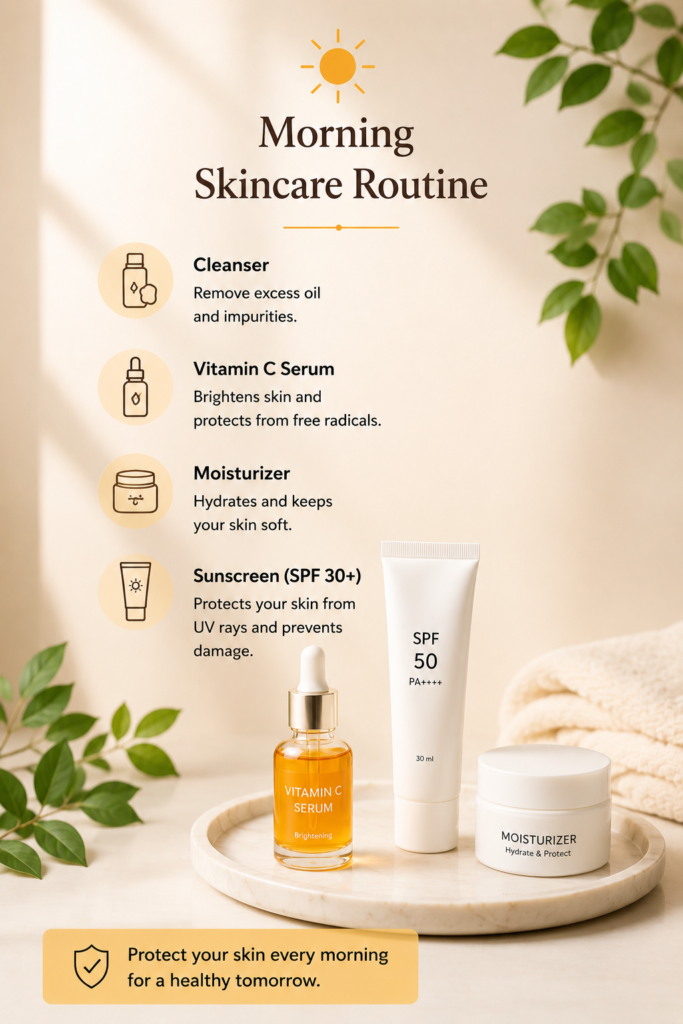
Morning Skincare Routine
Step 1: Cleanser
Start your day with a gentle cleanser to remove excess oil, sweat, and impurities that may have accumulated overnight.
Choose:
- Gel cleansers for oily skin
- Cream cleansers for dry skin
- Gentle cleansers for sensitive skin
Step 2: Hydrating Toner (Optional)
A toner can help refresh the skin and prepare it for the next steps. Look for hydrating ingredients like hyaluronic acid, glycerin, or rose water.
Step 3: Vitamin C Serum
Vitamin C is one of the best morning skincare ingredients. It helps brighten the skin, reduce the appearance of dark spots, and protect against environmental damage caused by free radicals.

- Benefits of Vitamin C:
- Promotes a radiant complexion
- Helps improve uneven skin tone
- Supports collagen production
- Provides antioxidant protection
Step 4: Moisturizer
Moisturizing is important for every skin type. A good moisturizer helps lock in hydration and strengthens the skin barrier.
Step 5: Sunscreen
Sunscreen is the most important step in your morning routine.
Use a broad-spectrum sunscreen with SPF 30 or higher every day, even when it’s cloudy or when you’re indoors near windows.
Benefits of sunscreen:
- Prevents premature aging
- Reduces sun damage
- Helps prevent pigmentation
- Protects against harmful UV rays
Night Skincare Routine
Step 1: Remove Makeup and Sunscreen
If you wear makeup or sunscreen, start with a cleansing balm, micellar water, or oil cleanser to break down product buildup
Step 2: Cleanser
Follow up with a gentle cleanser to remove dirt, oil, and impurities accumulated throughout the day.
This method, often called double cleansing, helps ensure your skin is thoroughly clean.
Step 2: Cleanser
Follow up with a gentle cleanser to remove dirt, oil, and impurities accumulated throughout the day.
This method, often called double cleansing, helps ensure your skin is thoroughly clean.
Step 3: Treatment Serum
Nighttime is the ideal time to use active ingredients because your skin focuses on repair while you sleep.
Depending on your skin concerns, consider:
- Niacinamide for oil control and pore appearance
- Hyaluronic Acid for hydration
- Retinol for fine lines and skin renewal
- Salicylic Acid for acne-prone skin
- Alpha Arbutin for pigmentation
Step 4: Moisturizer
A nourishing moisturizer helps replenish moisture and supports the skin’s overnight repair process.
For dry skin, look for ingredients such as ceramides, squalane, and shea butter.
Step 5: Eye Cream (Optional)
If you experience puffiness, dryness, or dark circles, an eye cream can provide additional hydration and care for the delicate under-eye area.

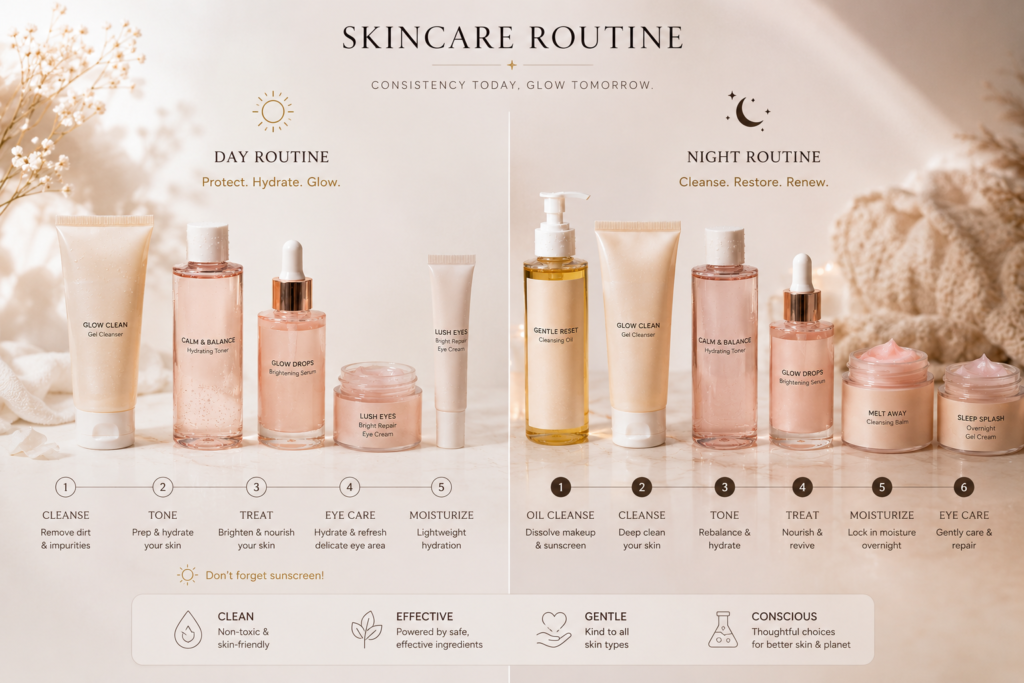
Morning vs Night Skincare Routine:
Morning Routine Night Routine focuses on protection Focuses on repair and recovery
Includes Vitamin C and sunscreen Includes treatment serums and repair ingredients
Prepares skin for environmental exposure Helps skin recover from daily stress
Lightweight products preferred Richer and more nourishing products can be used
Tips for Better Skincare Results
1. Be consistent with your routine.
2. Introduce new products gradually.
3. Always wear sunscreen during the day.
4. Avoid over-exfoliating your skin.
5. Stay hydrated and maintain a healthy lifestyle.
6.Patch test new skincare products before full use.
7. Choose products suitable for your skin type.
Which Routine Is More Important?
Both routines play important roles, but if you can only follow one step consistently, make it sunscreen during the day and cleansing before bed.
The best skincare results come from combining protection during the day with repair and hydration at night.
Frequently Asked Questions (FAQs)
1. Can I use the same skincare products in the morning and at night?
Some products, such as cleansers and moisturizers, can be used both morning and night. However, ingredients like Vitamin C are typically used during the day, while retinol is best used at night.
2. Is sunscreen necessary if I stay indoors?
Yes. UV rays can penetrate windows, and daily sunscreen use helps protect your skin from long-term damage.
3. Should I wash my face twice a day?
Yes. Cleansing in the morning and before bed helps remove dirt, oil, and impurities while keeping your skin fresh and healthy.
4. Can I use Vitamin C and Retinol together?
It is generally recommended to use Vitamin C in the morning and Retinol at night to maximize their benefits and minimize potential irritation.
5. How long does it take to see skincare results?
Most skincare products require consistent use for 4–12 weeks before noticeable improvements appear.
6. What is the ideal skincare routine for beginners?
A simple routine includes a cleanser, moisturizer, and sunscreen in the morning, along with a cleanser and moisturizer at night.
7. Do I need a separate night cream?
Not necessarily. However, some people prefer richer night creams that provide additional hydration and support overnight skin repair.